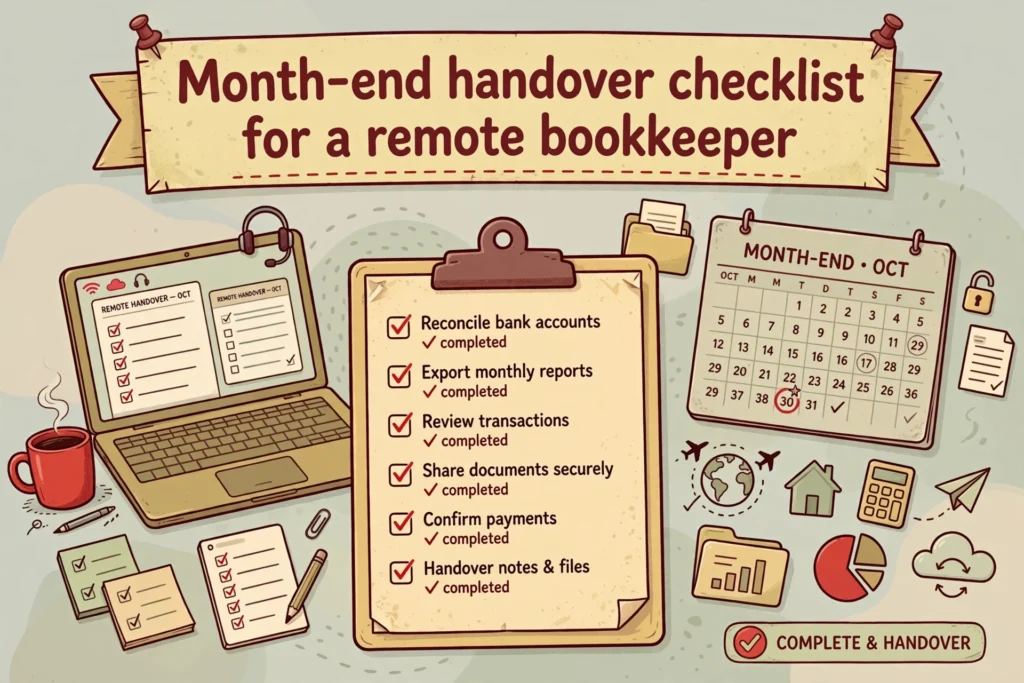
Quick Summary: South Africa’s remote job vacancies hit a record in the first half of 2026, up 28% year on year, with growth spreading beyond IT into finance, admin, customer support, and sales. The talent pool is deep and often overqualified, with many degree-holders applying for support roles, which favors UK employers. However, the vacancy spike is not a guarantee of easy hiring, so firms should use a compliant route like an employer of record and write a clear role brief before scaling.
South Africa’s remote job vacancies hit a record in the first half of 2026, up 28% year on year per Pnet’s July report. The real story for UK employers: growth now spans admin, finance, customer support, and sales, not just tech. But a vacancy spike is not a talent guarantee. This analysis turns the remote work trends into a practical test for any business planning to hire remote workers or add UK remote staff from South Africa.
South Africa’s Remote Support Market Hits a New High
South African remote work trends hit a milestone in 2026. Pnet’s July 2026 Job Market Trends Report shows remote opportunities reached their highest level to date, and hiring activity grew 10% month-on-month in June, with vacancy advertising up 10% year-on-year.
The Numbers Behind the 2026 Breakthrough
The headline figures matter less than where they come from. Pnet’s own report frames it clearly: remote work has moved beyond IT and now stretches across finance, sales, administration, and marketing. Employers kept adding remote roles through the first half of 2026.
The supply side is equally striking. Pnet’s skills-gap analysis found that call centre and customer support roles attract exceptionally high application volumes, with many candidates overqualified. Roughly 15% of call centre applicants hold degrees, and 51% hold certificates or diplomas, while 83% of these roles do not require tertiary education.
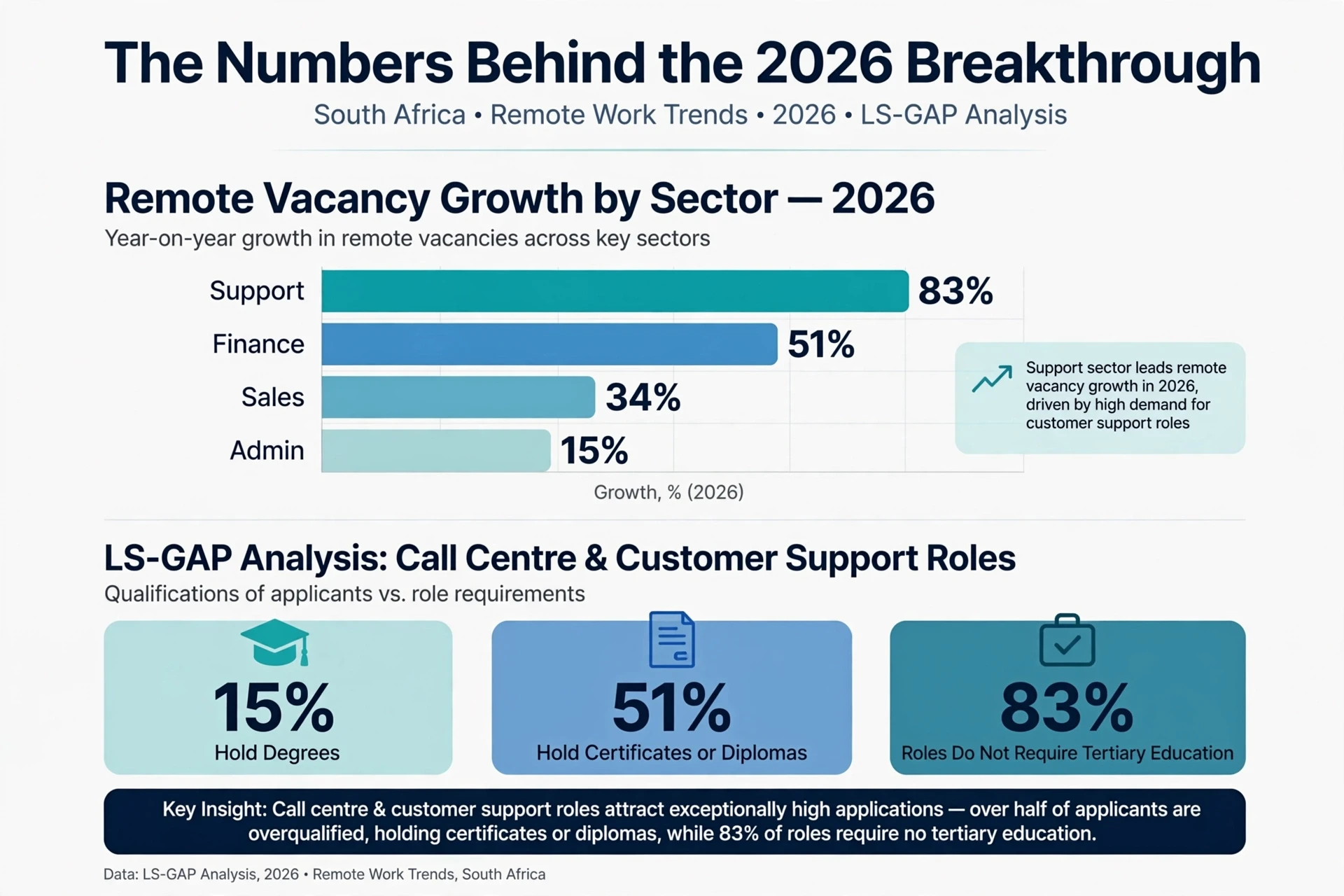
Key point: A deep, qualified candidate pool in support roles means UK employers can hire experienced, degree-holding staff at support-level salary bands.
Why Support Work Matters More Than the Headline
Headline growth numbers can mislead. For a UK business hiring embedded staff, the useful signal sits in the support segment itself, and the pattern there is consistent.
- Oversupply favours employers. Candidates apply in high volumes, so screening quality stays high.
- Skills exceed requirements. Diploma and degree holders accept roles that formally ask for less, giving you headroom for growth.
- Remote reach widens the pool. Admin, Office & Support roles featured in Pnet’s entry-level research across sales, administration, and customer support, confirming steady local demand.
For UK hiring managers, this combination of rising remote vacancies and deep support-sector talent is what turns 2026’s data into a practical hiring advantage.
Also Read: Hiring South African Remote Staff: UK Guides
Pnet’s July 2026 Job Market Trends Report shows remote vacancies in South Africa hit a record high in the first half of 2026, up 28% on the same period last year and 41% over two years. The headline for UK hiring managers: growth is no longer just IT. It spans finance, admin, business operations, sales, and marketing. Here is where the growth sits.
Finance Operations Move Beyond the Office
Finance is the standout. Remote finance roles have more than quadrupled over the past two years, making it the fastest-growing flexible sector after IT. The driver is practical: cloud accounting tools like Xero, Sage, and QuickBooks let bookkeepers and administrators work ledgers from anywhere.
What this means in practice:
- Accounts payable and receivable roles now dominate remote finance vacancies.
- Month-end close, reconciliations, and billing queries all run on UK hours, since South Africa sits only one or two hours ahead.
- UK firms increasingly hire finance administrators directly into their existing teams rather than outsourcing to an agency.
The roles are real and specific. A recent listing for a Finance Administrator serving a UK employer offers R29,000-R32,000 per month, fully remote from Cape Town, working 09:00-17:00 UK time.

Admin, Office, and Customer Support Become More Digitised
Roles once assumed to need a desk in an office are shifting too. Pnet’s earlier data showed Personal Assistants at 12% and Customer Support Agents at 11% of remote vacancies – higher shares than most professions. The July 2026 report confirms strong growth across “admin, office & support” as a sector.
The logic is simple. Shared inboxes, cloud CRMs, ticketing systems, and Teams or Slack mean diary management, travel booking, live chat, and phone support need no physical presence. For UK businesses, this opens a deep pool of English-speaking, service-focused staff at a fraction of local cost.
Business Operations, Recruitment, Sales, and Marketing Add Further Depth
The remaining growth layers on top of that. Remote marketing and design roles have doubled since 2024, and business & management plus sales show strong gains. The typical roles:
| Sector | Common Remote Roles |
|---|---|
| Business & Management | Operations coordinators, business analysts |
| Sales | Business developers, SDRs, account managers |
| Marketing | Campaign managers, content and design specialists |
| Recruitment | Sourcing and scheduling support |
Keep the size in perspective: remote work is still a small slice of South Africa’s total job market. The value is direction, not volume – the roles you need are the ones growing fastest.
For UK SMEs, that points to a clear shortlist: finance operations first, then admin and customer support, then sales and marketing support.
Also Read: 7 Practical Tips for Managing Outsource work to South Africa Teams
Why UK Employers Are Watching South African Support Talent
UK hiring costs keep rising. The National Living Wage hit £12.71 an hour in April 2026, and payroll pressure is pushing smaller firms to look further afield. South Africa keeps coming up, and for good reason: fluent English, strong service culture, and a two-hour time difference. Recent reporting on UK-to-SA hiring shows this shift is already under way, not just a trend on paper.
A Manageable Working-Day Overlap
Cape Town sits only one to two hours ahead of London. That means a support hire in Johannesburg works roughly 11:00 to 19:00 South African time to cover a full UK day. No night shifts, no handovers to another team. Your customer emails, live chats, and phone calls get answered during your actual business hours. Compare that to the Philippines or India, where evening or overnight rotas are normal. This single fact explains much of the recent interest.
Embedded Support Is Different From Generic Outsourcing
The old outsourcing model handed work to a call centre and hoped for the best. What UK employers want in 2026 looks different: one dedicated person, trained on your products, sitting in your Slack channels and joining your Monday stand-up. Live job listings show this clearly – UK firms now advertise first-line IT helpdesk and customer support roles for South African candidates working 09:00 to 17:00 UK time, with the same tools and escalation paths as in-house staff. It is employment, just remote and cross-border.

The Opportunity Is Real, but It Is Not Unlimited
A note on scale. Pnet’s July 2026 report confirms remote work in South Africa has hit its highest level yet, but remote vacancies remain a slice of a modest market, not an ocean of candidates. Top support talent gets noticed fast. Firms that move with a structured, compliant hiring route tend to land the best people first.
How UK Companies Can Hire South African Remote Support Staff
Hiring support staff in South Africa is legal and straightforward, but the structure you pick matters more than the job ad. Get three things right: the employment model, the role design, and the tax and payroll picture.
Choose the Employment Model Before the Job Offer
UK law does not automatically extend to someone working full-time from South Africa. Local law governs the employment instead, so you need a compliant route on the ground. Most UK companies pick one of three options: a full subsidiary, a local contractor, or an employer of record South Africa. A subsidiary takes months and makes no sense for one or two hires. A UK contractor agreement is riskier than it looks, since someone working like a full-time employee can still trigger IR35 exposure. An EOR legally employs the person, runs payroll in rand, and handles local filings while you direct their daily work.
Set the Role, Hours, and Controls Clearly
South Africa sits one or two hours ahead of the UK, so support staff can work standard UK hours without night shifts. Write those hours into the contract rather than assuming them. Define the support scope too: which channels they cover, what they can resolve alone, and what escalates to your UK team.

Then set your management controls. Weekly one-to-ones, clear ticket metrics, and shared tools do most of the work. A well-scoped role with a written job description stops the arrangement drifting into something neither side planned.
Check Payroll, Data, and Permanent-Establishment Questions
Do not pay a South African hire through your UK PAYE scheme. HMRC does not administer South African tax, and SARS expects local deductions, so the employee ends up exposed on both sides. The safer setup keeps South African payroll entirely in-country, covering PAYE, UIF, and SDL. Also ask where your data will sit, and check the permanent establishment question with your accountant if the role involves signing contracts or making decisions.
Also Read: 10 Best Employer of Record Companies in South Africa for 2026
What the 2026 Trend Means for Support-Team Planning
Pnet’s July 2026 data shows remote vacancies up 28% year on year, with admin, office and support roles growing fast alongside finance and sales. For UK hiring managers, that cuts two ways: a deeper talent pool, and more competition for it.
Start With Work That Can Be Measured
Pick roles where output is easy to track. Live UK-hours support, ticket handling and admin all lend themselves to clear targets. Write down channels, response times, escalation rules and tools before you shortlist anyone. A current vacancy for an email support specialist working UK hours from South Africa shows how specific that brief should be: named helpdesk tools, response-time targets, and written escalation steps.
Build Resilience Into the Arrangement
Growth in advertised roles does not mean the market is simple. Remote work contracted through 2023 and 2024 before rebounding, and it is still a relatively small slice of South Africa’s total job market.
Plan for one connection backup, a written handover and a named manager from day one.
Treat the Trend as a Hiring Signal, Not a Guarantee
The 28% figure describes adverts on one platform set, not hires you will make. Use it to justify a pilot role, measure delivery against agreed standards, then decide about scaling.
Also Read: Top 10 Remote Staffing Solutions for UK Businesses in South Africa
From Return-to-Office Pressure to Remote Work’s Second Wind
The Market Did Not Move in a Straight Line
Return-to-office headlines got loud in 2025, but the numbers tell a calmer story. Robert Half’s 2026 research found that 88% of employers still offer some hybrid option, even as fully on-site postings ticked up. Fully remote jobs did shrink. Yet workers did not give in: only 16% of job seekers say their top choice is an office job, and 55% rank hybrid first. For UK hiring managers, this means the best candidates still expect flexibility. If your office-based roles are losing out, a remote hire abroad can close that gap.
Digital Infrastructure Broadened the Role Mix
Better tools changed who can work remotely. Fast connectivity, shared dashboards, and cloud phone systems moved remote work beyond IT. Admin, finance, customer support, and marketing roles now plug into UK teams with ease. That is why structured hybrid has become the global norm, and why firms like Hire SA Talent can embed South African support staff directly into daily operations.
The lesson from 2026: remote hiring is not a trend to wait out. It is a talent strategy that keeps working while others fight over office attendance.
What UK Hiring Managers Should Watch Next
The Pnet data points to one clear direction: remote hiring in South Africa is spreading past IT. Finance vacancies offering remote work more than quadrupled over two years, and marketing and design roles doubled, according to Pnet’s July 2026 report coverage.
Three things deserve your attention:
- Support and finance roles are widening fast, so competition for the best candidates will grow. Move before salary expectations rise.
- Employer of record routes are maturing, which lowers the risk of a first hire.
- Growth figures describe platform vacancies, not guaranteed supply, so build a clear role brief before comparing providers, as our own Pnet analysis explains.
Also Read: South African Remote Team: UK SME Planning Example
South African Support Roles Are Becoming a Serious UK Hiring Option
South Africa’s job boards show a large, active pool of support talent. Pnet’s Admin, Office & Support sector lists over 10,000 open vacancies, spanning customer support, admin, and technical roles.
For UK businesses, that means real choice: trained professionals, strong English, and a time zone close enough to overlap with UK hours. Firms such as Hire SA Talent help you hire from this pool through a compliant route, so the practical barriers stay low. The rest of this article looks at what the 2026 data actually shows.
The 2026 vacancy data shows one thing clearly: strong South African support talent is in demand. Hire SA Talent helps UK businesses hire these professionals through a compliant, structured route. Visit Hire SA Talent today and find your next team member.
Frequently Asked Questions
Q1: What are the key remote work trends in South Africa for 2026?
Demand for remote support roles is rising, with Pnet vacancy data showing steady growth in admin, customer service, and finance positions.
Q2: Which South African sectors are hiring remote workers in 2026?
Support, admin, finance, sales, marketing, and IT lead hiring, with customer service roles showing the strongest vacancy growth.
Q3: How can UK businesses hire remote support staff from South Africa?
Use an employer of record like Hire SA Talent to handle contracts, payroll, and compliance while the staff works within your team.
Q4: How do UK time zones affect South African remote staff?
They barely do. South Africa runs 1-2 hours ahead of the UK, so teams share most working hours.
Q5: What does hiring a South African remote worker cost?
Salaries typically run 40-60% below UK equivalents, plus a monthly employer of record fee covering compliance and payroll.
Conclusion
South Africa’s remote work market hit a record in 2026. Pnet’s July report shows remote vacancies up 28% year on year and 41% over two years, with growth spreading well beyond IT into finance, sales, admin, office support and marketing. For UK businesses, the signal is clear: skilled South African support staff are increasingly open to remote roles, and the talent pool is broadening. But the numbers describe advertised vacancies, not guaranteed hires. Read them as direction of travel, then ground your own decision in a specific role brief and verified costs, as covered in our pillar guide to South African remote work.