Your next key hire could be anywhere on the planet. The question is not just who to hire, but where to hire from. For UK business leaders, the choice between South Africa and other popular outsourcing destinations is more than a hunch. It is a strategic decision impacting your budget, your workflow, and your growth. This guide compares the tangible benefits and trade offs to inform your next move.
Analysing Cost: South Africa vs Popular Outsourcing Destinations
Cost is often the primary driver for building a global team. Yet a simple salary comparison paints an incomplete picture. The true measure is the total cost of employment and the value returned.
The Raw Numbers: Salary Comparisons
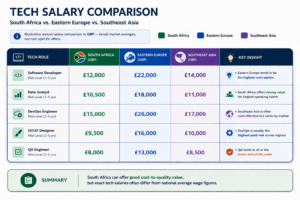
While many emerging markets offer low wage rates, South Africa presents a unique case. Its deep pool of skilled, English speaking professionals in fields like software development, digital marketing, and finance often commands salaries higher than those in Southeast Asia. However, these figures remain significantly below UK equivalents, typically offering savings of 50% or more. For true cost effective labour, you must weigh salary against productivity, ramp up time, and management overhead.
Beyond Salary: Total Cost of Employment
Direct salary is just one piece. Consider recruitment fees, benefits, technology stipends, and legal setup. Regions with complex labour laws or mandatory costly benefits can erode initial savings. South Africa’s regulatory framework is robust but clear, and partnering with an expert Employer of Record can standardise these costs, making long term budgeting predictable.
Time Zones, Productivity, and Remote Workforce Management
Effective collaboration is the backbone of remote work. Time zone differences directly dictate how your team communicates and solves problems in real time.
The Alignment Advantage: South Africa’s GMT+2
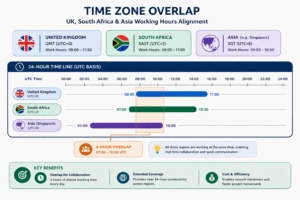
For UK companies, South Africa operates just one or two hours ahead. This creates a massive operational advantage. It enables a full, overlapping workday for real time meetings, instant messaging, and synchronous project work. This alignment simplifies remote workforce management immensely, fostering a more cohesive team culture compared to regions with a 5 to 12 hour gap.
The Collaboration Cost of Time Zone Differences
Hiring in regions like the Philippines or India introduces a half day or more of delay. While this can allow for a ‘follow the sun’ workflow, it often slows decision making, requires extensive asynchronous documentation, and can leave remote staff feeling isolated. The management time required to bridge these gaps is a real, though hidden, cost.
Talent, Culture, and Long Term Value
Sustainable growth depends on more than just cost and convenience. The quality of your global talent pool and how well your teams mesh are critical.
Skills Availability in the Global Talent Pool
South Africa boasts world class universities and a strong corporate heritage, particularly in financial services, legal, and IT sectors. This creates a talent pipeline with qualifications and experience that align closely with UK standards. While other outsourcing destinations have large IT graduate pools, South Africa offers a high concentration of mid to senior level professionals accustomed to complex, enterprise level projects.
Cultural Compatibility and Business Practices
Cultural fit reduces friction. South African business culture shares strong similarities with the UK, including communication styles, professional etiquette, and legal principles. This shared context leads to fewer misunderstandings and faster integration into your company’s way of working. Assessing cultural compatibility is as vital as assessing technical skills for long term success.
Navigating Logistics: Compliance and Operations
The practicalities of hiring across borders stop many businesses. Navigating foreign law, taxes, and payments is daunting without the right partner.
The Challenge of International Payroll and Law
Setting up a legal entity in a foreign country is expensive and slow. You then face ongoing complexities like international payroll, local tax withholdings, pension fund compliance, and employment law disputes. This is true whether you hire in South Africa, Poland, or Brazil. Each region presents a unique web of regulations.
The Employer of Record (EOR) Advantage
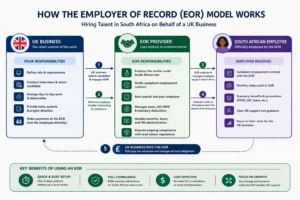
An Employer of Record model is the key to unlocking global hiring without legal entanglement. A qualified EOR acts as the legal employer in the country, managing all compliance, payroll, and HR duties. This allows you to onboard talent in South Africa or other regions in weeks, not months, with near zero legal risk. It turns a complex administrative burden into a simple operational expense.
Choosing between South Africa and other regions for remote staff is not about finding the cheapest option. It is about identifying the source that provides the optimal blend of cost, convenience, talent, and compatibility for your specific business needs. For UK companies, South Africa’s compelling mix of cost savings, time zone alignment, cultural synergy, and high end skills offers a distinct competitive advantage.
Your strategy should start with a clear audit of your priorities. Is absolute lowest cost paramount, or is seamless collaboration worth a premium? Once you define your needs, the path forward becomes clear. To explore how South African talent can integrate seamlessly into your operations, contact us and connect with our specialist partners.