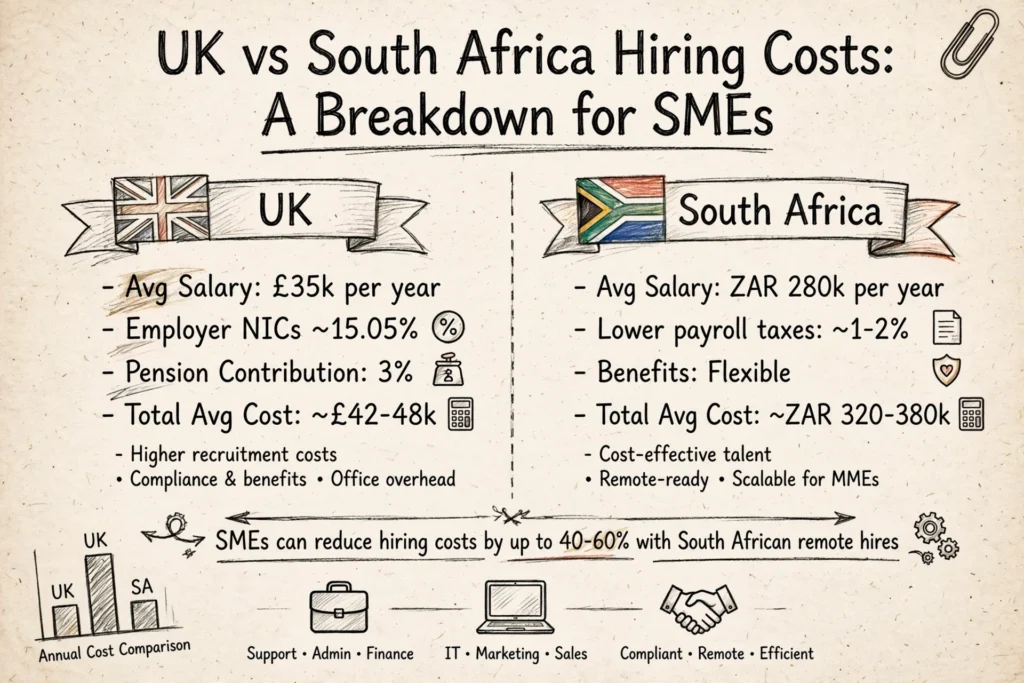
Quick Summary: UK companies hiring remote staff in South Africa should choose an employment route first, then write a specific role brief, source and vet candidates, and use an Employer of Record for contracts, payroll, PAYE, UIF and SDL. Set UK working-hour overlap, data access, connectivity backup plans and 30- and 90-day goals before the start date, while budgeting for the full employment cost rather than salary alone. Hire SA Talent introduces vetted candidates, while SA Konexion handles recruitment and employment through this compliant route.
An operations manager in Leeds has budget for one customer support hire and three strong South African candidates already shortlisted. The blocker is not talent. It is that nobody can say who signs the contract, who runs that first monthly payroll, or whether the candidate’s hours actually overlap with the Birmingham support queue.
That gap between a good shortlist and a compliant hire is what this guide closes. You will get the full ordered process to hire staff from South Africa: sourcing, vetting, choosing between an Employer of Record South Africa setup and other routes, then contracts, payroll and onboarding that work on UK hours. The steps also flag where UK-side duties sit and which South African employment-law inputs you need. Hire SA Talent introduces clients, and SA Konexion handles recruitment and employment, so every step below reflects how that route works in practice.
Before You Start: Decide the Employment Route and the Working Hours
How to Hire Remote Staff from South Africa: The Route Decision
How do I hire remote staff from South Africa? Follow six steps: (1) decide the employment route, (2) define the role and UK working hours, (3) source candidates, (4) run interviews and contracts, (5) onboard through your chosen employer, and (6) manage payroll, leave and performance.
You do not need a South African entity to hire remote staff. Compare the three routes:
| Route | Who employs | Best for |
|---|---|---|
| Contractor | Themselves | Ad hoc project work |
| Employer of Record (EOR) | The EOR, on your instruction | Full-time embedded staff, no setup |
| Local entity | Your own company | Large, permanent teams |
Most UK businesses hiring one to ten people choose an Employer of Record South Africa arrangement. If this is your first hire, the process behind legally hiring your first South African employee walks through each document and check in order.
What South African Employment Law Means for Your Working Hours
How many hours a week can a South African remote employee work? The Basic Conditions of Employment Act (BCEA) caps ordinary hours at 45 per week, and overtime at 10 hours per week. Working-hours rules under the BCEA also set daily limits of nine or eight hours depending on the week.
The 45-hour cap matches a UK-style week, so a 9am to 5pm UK-aligned role is realistic. Agree the overlap window in the contract, and check threshold and overtime rules because staff earning above R269,600.90 a year fall outside the hour caps.
Budget for the Full Employment Cost, Not Just the Salary
Salary is only the start. Add PAYE, UIF and SDL contributions, leave and public holidays, and EOR fees. Our South Africa salary guide shows typical totals, and the full cost comparison breaks down every component next to UK figures.
Step 1: Write the Brief That Attracts the Right South African Candidates
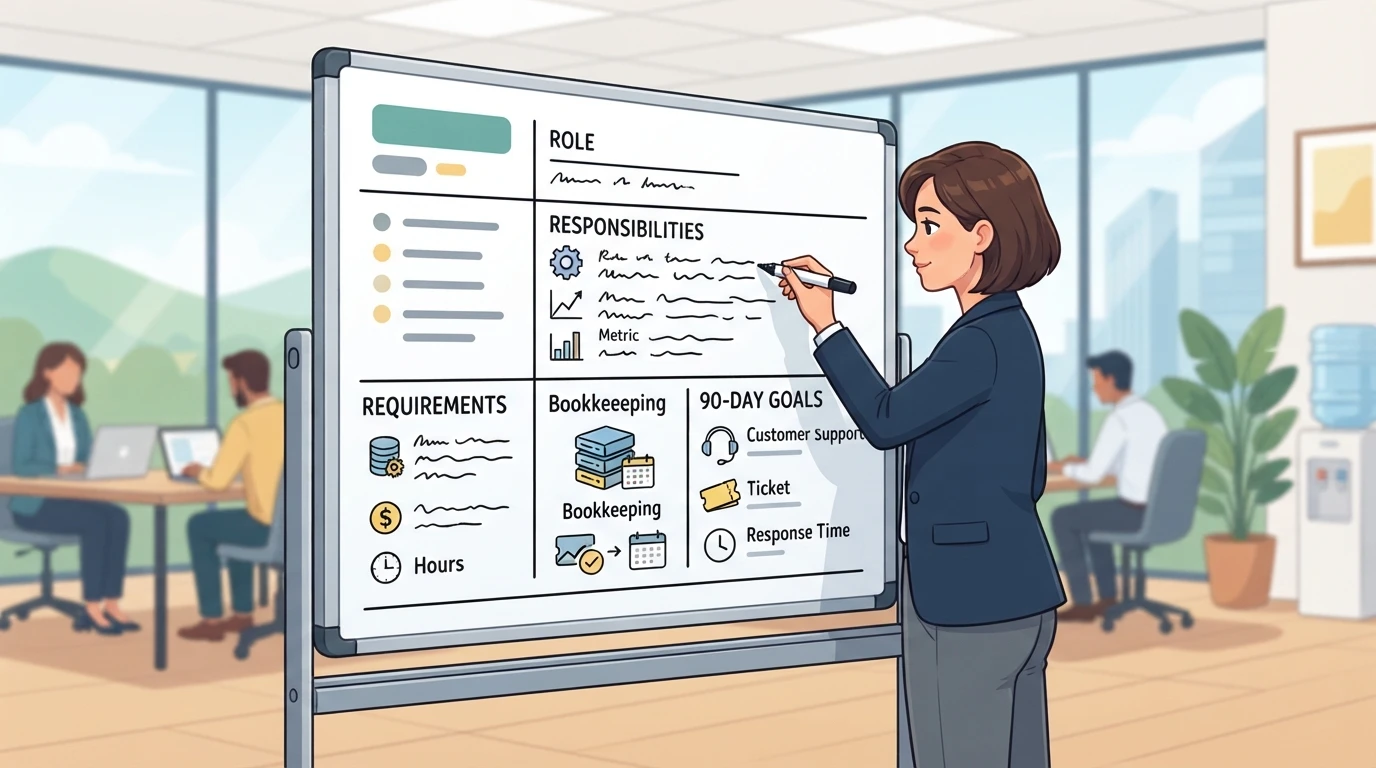
Turn the Role Into a One-Page Brief
Before you hire staff from South Africa, write the brief. One page is enough, and it saves weeks of vague back-and-forth. Cover five things: the tasks the person will own each week, the tools they will use, the UK hours they must work, the reporting line, and what “good” looks like after 90 days. A bookkeeping brief, for example, lists the software stack and the month-end tasks; a customer support brief lists ticket volumes and response targets. Generic briefs attract generic applicants, so the more specific yours is, the stronger your shortlist.
State the Employment Route, Salary Basis and Location Up Front
South African candidates expect clarity on money and structure before they apply. Say whether the role runs through an employer of record or a direct hire, whether pay is quoted in rand or pounds, and that the person works remotely from South Africa. Include a salary range rather than “competitive”, because experienced candidates filter those adverts out. For current benchmarks, a South Africa salary guide for UK employers helps you set a range that wins good applicants without overpaying.
Set the Interview and Assessment Format Before You Advertise
Decide the format now: a 30-minute video call, a short paid or unpaid task, then a reference check. State the timeline in the advert so candidates know what to expect. This matters more here than in the UK market, where notice periods often stretch to four weeks or more and moving without a plan stalls the start date. Candidates who see a clear process apply more readily and drop out less often.
Step 2: Source and Shortlist Candidates Through the Right Channels
Compare the Main Sourcing Routes for UK Buyers
When you hire staff from South Africa, you have three routes. A staffing provider introduces vetted candidates and, with partners like Hire SA Talent, links the introduction to a compliant employment route. A general jobs board such as Careers24 or LinkedIn gives you volume but no vetting, so you screen everything yourself. An EOR with a recruitment arm, like Deel or Remote, bundles both. South Africa’s time zone overlap with the UK means each route works, but provider-led sourcing saves the most manager hours.

Write Screening Criteria That Remove Mismatches Early
Turn your job brief into four or five knockout questions. Ask about the exact tools in the brief, the UK overlap hours they can commit to, and one concrete example of the work. For bookkeepers, confirm the software; for support roles, ask for a sample tone response; for IT roles, check escalation experience. Reject anyone who cannot name their internet backup plan. These checks cut the pile fast because South African candidates expect a structured process and answer them directly.
Build a Shortlist You Can Act On Fast
Keep the shortlist to five people, each with a one-line summary: role fit, hours overlap, and salary expectation in rand. Score them against the same criteria so a second reviewer can compare, and book all interviews within one week while interest is fresh. Candidates in Johannesburg, Cape Town and Durban often hold multiple offers, so speed is your advantage. If two scores tie, choose the one with the clearer 90-day proof of work.
Need a deeper candidate pool before shortlisting? Our team covers sourcing routes for UK employers in more detail on our remote staffing solutions comparison.
Step 3: Vet, Test and Make the Hiring Decision
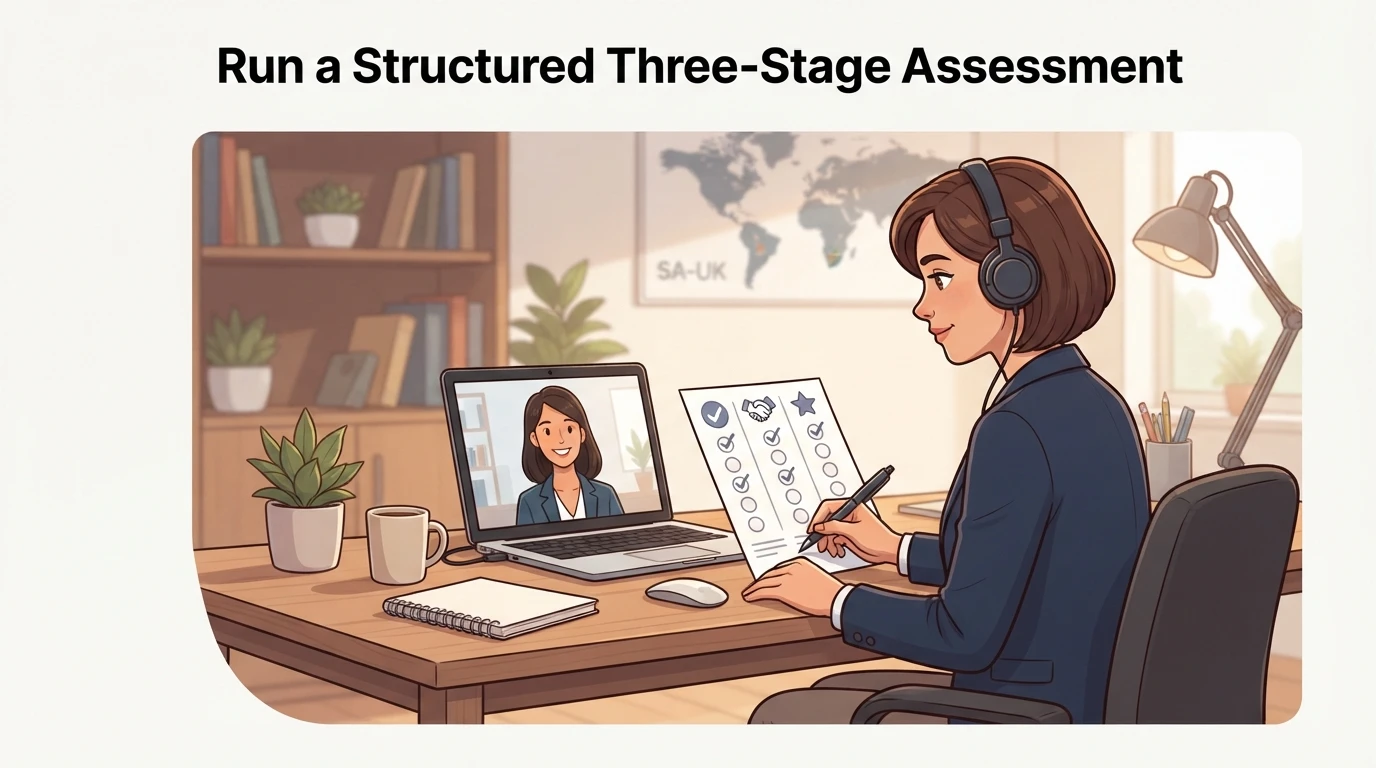
Run a Structured Three-Stage Assessment
Score every candidate the same way, or you will hire on charm. Stage one is a 30-minute video call focused on the tasks in your brief. Stage two is a short task that mirrors real work, such as a sample inbox triage for a VA or a mock refund reply for support. Stage three is two references from a previous manager, not a colleague. Score each stage out of five on a simple card so trade-offs stay visible. For example, if you are hiring a VA, a ready-made set of virtual assistant interview questions with a scorecard keeps the comparison fair across shortlisted candidates.
Verify Employment History, Right to Work and Identity Documents
Ask for a certified copy of the South African ID, and confirm the surname and number match the CV. Check the last two roles in writing, including dates and the reason for leaving. A South African citizen needs no UK visa to work remotely for your business, but you still want documented proof of identity and address. Keep copies under UK GDPR rules and only share what an Employer of Record actually needs.
Warning: a candidate who resists reference checks is rarely the bargain they appear to be.
Agree the Offer in ZAR With a Clear Employment Basis
Offer the salary in rand, not pounds, so the figure stays fixed locally. State the employment basis, probation terms and notice period in writing before anyone resigns. Your Employer of Record then converts that offer into a compliant South African contract covering PAYE, UIF and SDL.
Step 4: Set Up the Employment, Contracts and First Payroll
Who Does What Between Offer and Start Date
Your chosen route decides who is the legal employer. With an Employer of Record South Africa setup, the EOR employs your staff member locally, runs contracts and payroll, and handles statutory filings, while you direct daily work. If you run a South African entity, you hold the employer duties yourself. Hire SA Talent introduces the candidate; the EOR or entity then completes the hire. Agree the offer, salary in rand, start date and reporting line in writing before anyone signs.
| Task | Employer of Record | Your UK Company |
|---|---|---|
| Employment contract | Drafts and holds it | Reviews and approves terms |
| PAYE, UIF, SDL filings | Registers and files | N/A |
| Daily management | None | Full control |
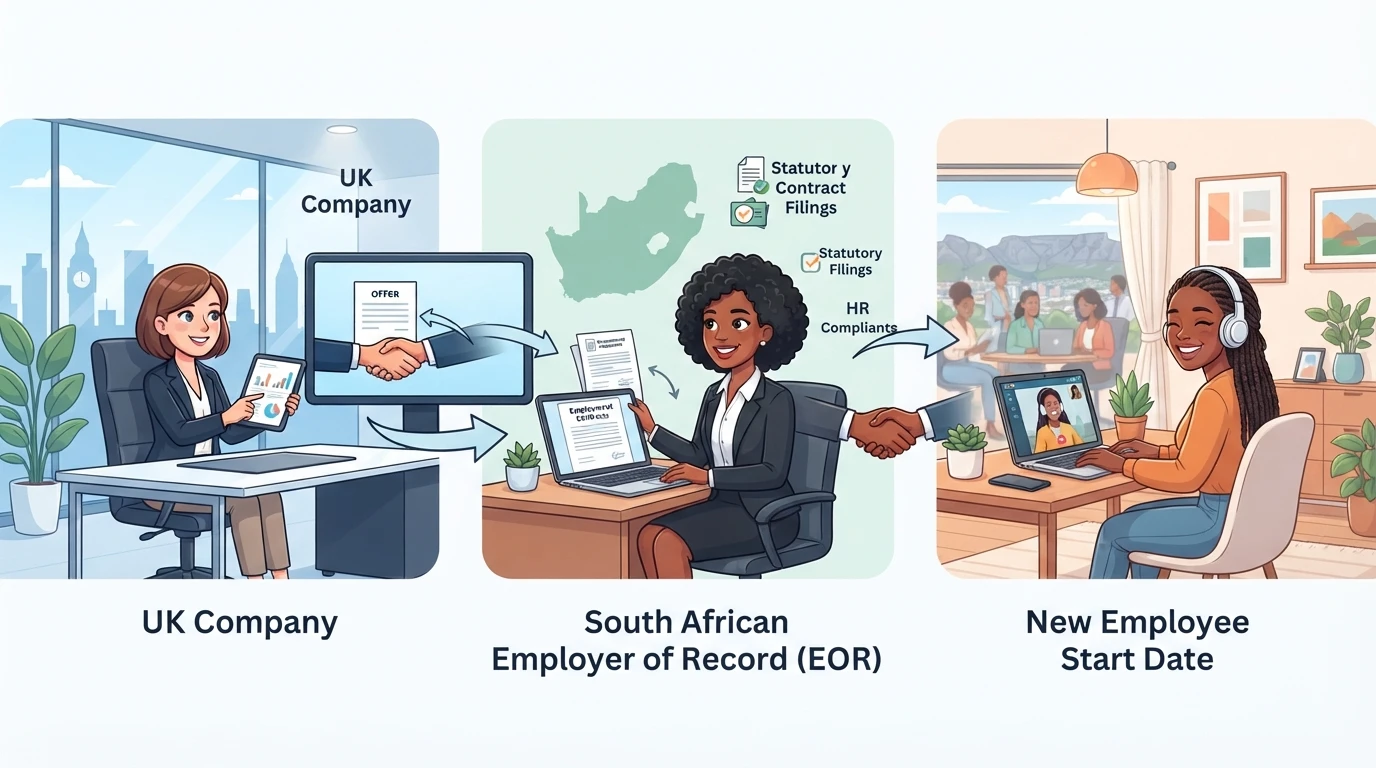
Get the Payroll and Tax Documents Right on Day One
South African payroll has three compulsory employer contributions: PAYE on salary, UIF and SDL. The EOR registers your staff member with SARS, the tax authority, before the first run. Collect a signed contract, a bank account in the employee’s name, a tax number and a completed UI-19 form. Check the BCEA earnings threshold, because staff above ZAR 269,600.90 a year lose the hour caps and overtime rules covered earlier. Salaries should be benchmarked before you commit, which is where a South Africa salary guide UK comparison helps you set a fair rand figure.
Plan the First Payroll Cycle and Payment Flow
Most EORs pay monthly in rand, with a cut-off date five to ten working days before payday. Confirm the cut-off, the payday and who funds the rand amount. If you send GBP, agree who carries the exchange rate risk and when the rate is set. Budget for leave accrual and South African public holidays too. For what happens after payday, the remote team management guide covers onboarding and day-to-day handover.
Step 5: Onboard for Remote Work and Make the First 30 Days Count
Most failed remote hires are not bad workers. They are people who started with no rhythm, no access and no goals. Fix that before day one and the rest follows.
Agree the Working Rhythm and Communication Rules
Set the overlap window first, then build around it. Pick a daily check-in time that suits both of you, agree which tool carries urgent messages, and decide what “urgent” actually means. Tell the new starter when you are offline, because UK and South African public holidays differ. A shared calendar and one daily message usually beat constant calls. You can go deeper on this in our remote team management guide, but the daily check-in is the anchor.
Set Up Systems, Access and Data Handling
Give access before the start date, not after. That means the email account, task board, file folders, phone number and any finance or CRM tools the role needs. Check access is limited to what the job requires, because South African staff working on UK systems sit inside both POPIA and UK GDPR scope. Note that employee records in South Africa fall under POPIA data breach rules, so agree how breaches are reported early.
Write the access list down before day one. It turns a chaotic first week into a checklist.
Define the First 30 Days and First 90 Days Outcomes
You already defined what good looks like at 90 days in your brief. Now break it down. Give three or four concrete outcomes for month one, such as running a full week of tasks solo or handling a month-end handover. Review at day 30 against those outcomes, then confirm the 90-day picture. One sentence of context for the person making this work: Hire SA Talent introduces clients to vetted South African staff, and SA Konexion delivers the recruitment and employment itself, so onboarding stays between you and the person you hired.
Common Mistakes to Avoid When Hiring Remote Staff from South Africa
Treating a Contractor as a De Facto Employee
UK firms often hire someone on a freelance contract, then set fixed hours, a reporting line and annual leave. Under South African law, that control makes the person look like an employee, which exposes you to back-pay claims, PAYE and UIF liabilities. An employer of record South Africa setup removes this risk because the local EOR is the legal employer.
Agreeing Salary Before Settling the Employment Route
Candidates quote gross ZAR salaries, but your real cost depends on whether you run payroll through an EOR, an agency or your own entity. Fix the salary first and you may find the total package breaks your budget. Settle the route, then negotiate.
Skipping the Data Access and Continuity Plan
South Africa’s load shedding can cut power and internet for hours, and POPIA and UK GDPR rules govern how a remote worker handles your customer data. Build both into onboarding: a VPN, controlled system access, backup connectivity and a written escalation path. A practical UK-SA data-access checklist covers what to set up before day one, so a dropped connection never becomes a service outage.
You now have the full six-step process. If you’d rather skip the vetting and compliance legwork, Hire SA Talent connects you with dependable South African staff across every role covered here. Share your brief, and we’ll shortlist candidates who match your hours and tasks. Start with one role.
Frequently Asked Questions
Q1: How to hire remote staff from South Africa?
Define the role and UK hours, source candidates, vet them with structured tests, then employ them through an Employer of Record, which handles contracts, PAYE, UIF and SDL locally.
Q2: Do I need a South African entity to hire remote staff?
No. An EOR employs staff legally for you. Only larger, permanent teams justify setting up your own entity.
Q3: How much does a South African remote employee cost?
Salary plus PAYE, UIF, SDL, leave, public holidays and EOR fees. Budget for the full package, not the rand figure alone.
Q4: Can South African staff work UK hours?
Yes. The BCEA’s 45-hour cap matches a UK week, so a 9am to 5pm overlap is realistic. Confirm internet backup plans.
Q5: Who handles payroll and tax?
Your EOR registers the employee with SARS and files PAYE, UIF and SDL. You fund the rand amount each cycle.
Conclusion
Hiring remote staff in South Africa from the UK works when you follow the order: pick the employment route first, write a specific brief, source and vet with structured tests, then let an Employer of Record South Africa handle contracts, PAYE, UIF and SDL. Set the UK overlap hours and data access before day one, because BCEA hour caps, POPIA rules and load shedding all shape how the role actually runs. Budget for the full cost, not just the rand salary, and agree salary only after the route is settled. Once your new starter is in, the remote team management guide covers onboarding rhythm, handovers and day-to-day management from there.